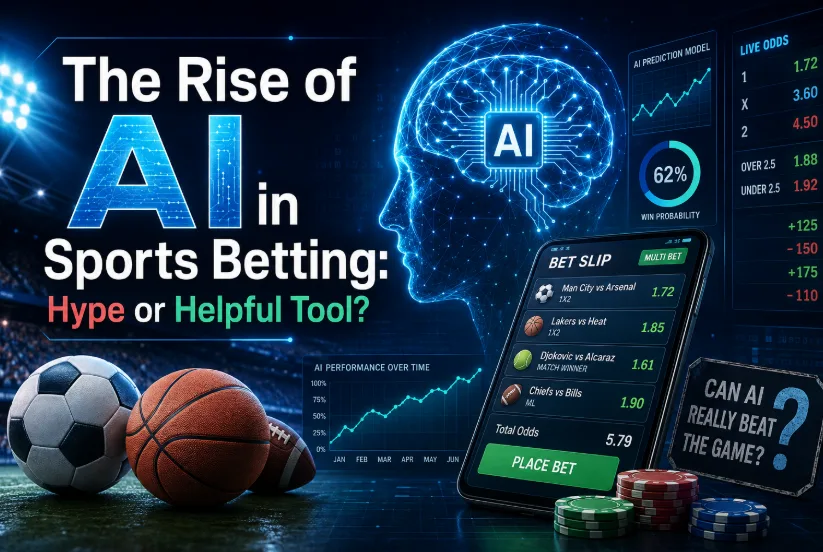
Last season, one football bettor spent three months building a spreadsheet model to predict Premier League outcomes. The model tracked shots on target, defensive errors and even weather patterns at different stadiums. By Christmas, its record was barely better than a coin flip. Despite those results, many bettors remain convinced that artificial intelligence can identify patterns that traditional analysis cannot.
Sports betting has always attracted people who think they can find an edge through data analysis. The difference today is that machine learning algorithms can process thousands of variables in seconds, spotting patterns that would take humans years to identify. Across markets from Europe to Africa, platforms are integrating AI-driven features into their offerings. In Kenya, where mobile betting has expanded rapidly over the past five years, users accessing the SportyBet Kenya login may encounter AI-generated tips alongside traditional odds. The technology promises smarter predictions, but whether it delivers consistent value remains a question worth examining.
What AI Actually Does in Betting Markets
The algorithms powering these systems aren't magic. They're built on statistical models that analyze historical match data, player performance metrics, injury reports, and sometimes even social media sentiment. A typical model might ingest ten seasons of results, weight recent form more heavily than distant matches, and adjust for variables like home advantage or referee tendencies.
Some operators use AI to set their own odds more accurately, reducing their exposure to sharp bettors who exploit pricing inefficiencies. Others offer AI predictions directly to customers as a value-added feature. The distinction matters because these are fundamentally different applications with different incentives.
The Pattern Recognition Problem
Here's where things get interesting. AI excels at finding correlations in massive datasets. It can identify that teams playing their third away match in seven days tend to concede more goals in the final twenty minutes. That's genuinely useful information. But correlation isn't causation, and football isn't played in a statistical vacuum.
The underlying technology of these forecasting models relies on predictive analytics, the same fundamental principles major industries use to identify patterns in historical data. Banks use it for credit scoring. Retailers use it for inventory management. The challenge in sports betting is that past performance becomes less predictive when you're dealing with human athletes whose motivation, fitness, and tactical approaches shift constantly.
I spoke with a data analyst who worked briefly for a European bookmaker. He described a model that performed brilliantly in backtesting, showing consistent profits across five seasons of historical data. When deployed live, it lost money within three weeks. The reason? The model had identified patterns that existed in the training data but didn't persist into the future. Overfitting is the technical term. In plain English, it learned the noise instead of the signal.
Where AI Adds Real Value
That doesn't mean these tools are worthless. AI can help bettors in specific, measurable ways. It's particularly good at tracking line movements across multiple bookmakers, identifying when odds shift dramatically in response to new information. If you're placing bets manually, you might miss a key injury announcement that drops a team's price from 2.10 to 1.85 within minutes. An AI monitoring system won't.
The technology also helps with bankroll management. Some platforms use machine learning to analyze a user's betting history and flag patterns that indicate problem gambling behavior. That's a genuinely positive application that has nothing to do with prediction accuracy.
A Realistic Assessment
So is AI in sports betting hype or helpful? The honest answer is both. The technology provides useful data processing capabilities that can inform better decisions. It's not a crystal ball. Anyone selling you an AI system that guarantees profits is either lying or hasn't run it long enough to hit the inevitable losing streak.
For casual bettors, AI tools might offer slight improvements in research efficiency. They won't replace fundamental knowledge of the sport or basic probability theory. My spreadsheet-building friend finally accepted that no model, human or artificial, can consistently predict which team will score first or whether a match will have over 2.5 goals. Too many variables. Too much randomness.
The smarter operators are positioning AI as a research assistant rather than a fortune teller. That's probably the right framing. It can show you what the data suggests. What you do with that information still comes down to judgment, discipline, and a healthy respect for uncertainty.