Understanding Market Volatility and "Game Feel"
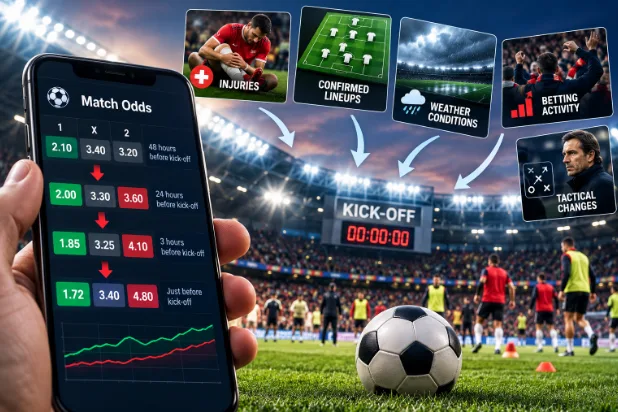
Real-time markets differ significantly from fixed-odds betting. While pre-match lines are established based on historical data, form, and team news, in-play odds are fluid and react instantly to action. Algorithms update constantly to reflect goals, injuries, possession statistics, and even weather conditions. However, statistical models do not always quantify human elements immediately, such as visible frustration, fatigue, or a sudden tactical switch. The primary distinction for the bettor is the disconnect between statistical probability and "game feel." A pre-match favorite may dominate possession but concede a lucky goal against the run of play. In this scenario, the live odds for the favorite will drift, offering a different potential return than was available at kickoff, despite the team still performing well. This is where the eye test becomes valuable. If a team is losing 0-1 but creating frequent chances, the data might predict a loss, but visual evidence suggests a goal is imminent.Strategies for High-Paced Sports
Certain sports lend themselves better to in-play strategies due to their scoring structure and frequency of stoppages. Experience shows that tennis and football are prime examples where momentum shifts are visible to the astute observer before they impact the final result.Momentum Shifts in Tennis
Tennis is a significant market for real-time analysis due to its unique point-by-point structure. A common analytical approach involves the "break back" scenario. This entails identifying a strong server who has just lost a service game. Market algorithms often adjust sharply to a broken serve, pushing the odds against the server. However, experienced players often respond with increased intensity immediately after a setback. If a live tennis bet is considered on the favorite to win the next set or break back immediately, the perceived value may differ from general match-winner markets.Reading the Flow in Football
Similarly, in football, the "late goal" scenario is a staple of live strategy. When a heavy favorite is drawing against an underdog late in the game, the market often assumes a draw is the most likely outcome. However, watching the live broadcast often reveals a different story, such as a siege on the underdog's goal. This creates a window where the implied probability of a goal in the odds may be lower than the reality on the pitch suggests.Essential Rules for In-Play Discipline
The speed of live betting can lead to impulsive decisions if proper discipline is not maintained. Successful market participants know that consistency in this arena requires a combination of technical readiness and mental fortitude.- Technology Matters: A reliable internet connection is necessary. Latency or lag can result in price changes before a selection is confirmed, as markets suspend frequently during critical moments like penalties or VAR checks.
- Avoid Chasing Losses: Emotional control is paramount. If a wager fails due to a late goal, the impulse to immediately place another live sport bet to recover funds is detrimental to long-term strategy. Decisions must remain analytical, based on what is happening on the pitch rather than account balances.
- Specialization Over Volume: It is often advisable to specialize in one match rather than attempting to monitor multiple games. Trying to track the momentum of three different events simultaneously can lead to missed details. Focusing on a single event allows for monitoring every pass and player reaction.