Betting on sports has really changed a lot. It used to be all about guessing or listening to what some pundit said. Now, though, computers can look at tons of information way faster than any person ever could. This is a big deal, especially for people interested in sports betting Malaysia, because it means there are new ways to find good bets. We’re talking about using smart computer programs to figure out what might happen in a game, which can give you an edge.
Key Takeaways
- Modern computer programs can look at huge amounts of game data, like player stats and past results, to make educated guesses about future games. This is a big change from just relying on hunches.
- These programs use machine learning to find patterns that people might miss, helping to identify betting opportunities that aren’t obvious.
- The speed at which these systems can process information is incredible, especially important for live betting where odds change quickly.
- For anyone involved in sports betting Malaysia, understanding how these prediction tools work can help make smarter betting choices.
- To get the most out of these tools, it’s smart to practice using them with fake money first and always manage your betting funds carefully.
Leveraging Advanced Analytics for Sports Betting Malaysia
Gone are the days when sports betting in Malaysia relied solely on gut feelings or a deep, personal knowledge of a team. The game has changed, and it’s all thanks to data. We’re talking about betting analytics malaysia moving beyond simple stats sheets into the complex world of algorithms and artificial intelligence. It’s a shift that’s making things more precise, and frankly, a lot more interesting for anyone serious about placing a wager.
The Evolution from Gut Feelings to Algorithmic Insights
Think back a decade or two. Handicapping a game often meant watching a lot of sports, reading the papers, and just having a ‘feel’ for who might win. It was subjective, and honestly, pretty hit-or-miss. Now, we’re seeing a massive change. Instead of just looking at win-loss records, we’re analyzing player tracking data, biometric information from wearables, and even social media sentiment. This sheer volume and complexity of data is impossible for a human to process effectively in real-time.
- Massive Data Ingestion: Modern sports generate terabytes of data. Player movements are tracked 25 times a second, and wearable sensors record heart rates and other physical metrics. Social media buzz can even indicate team morale.
- Identifying Hidden Correlations: Algorithms can spot connections that no human analyst would ever notice. For example, how a specific defensive formation impacts a team’s shooting percentage, or how travel fatigue affects performance.
- Speed of Analysis: Live betting requires odds to update in milliseconds. Manual adjustments simply can’t keep up, creating opportunities for those using automated systems.
Understanding AI-Powered Prediction Models
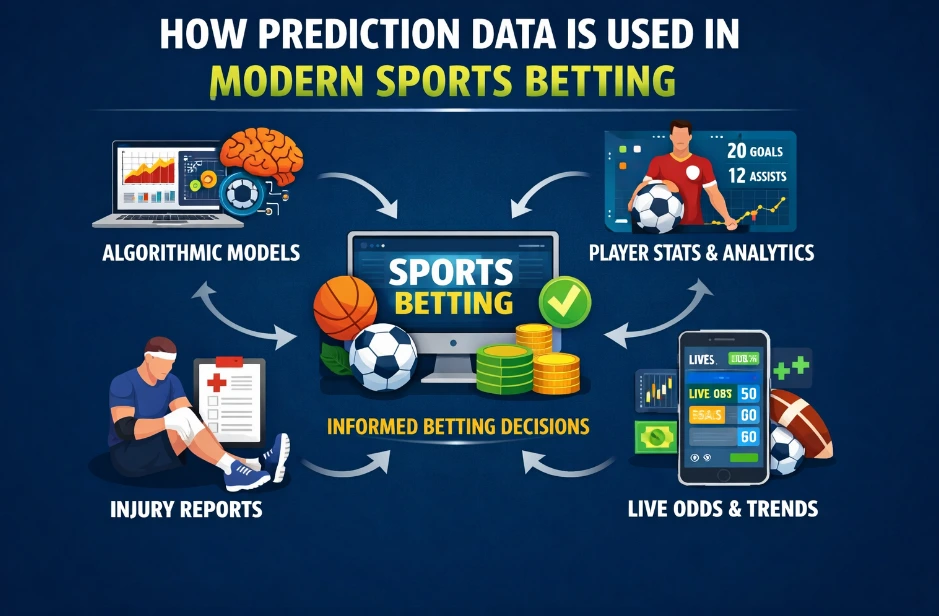
Artificial intelligence, particularly machine learning, is at the heart of this transformation. These aren’t just fancy calculators; they are systems that learn and adapt. They take in historical data – think player stats, game conditions, injury reports, even how the public is betting – and use it to predict the probability of different outcomes.
AI models can process millions of data points for a single game, identifying subtle patterns that influence results. This allows for more accurate probability assessments than ever before.
The Role of Machine Learning in Modern Handicapping
Machine learning algorithms are the workhorses. Different types are used for different tasks:
- XGBoost and LightGBM: Great for structured data, like player statistics and team performance metrics.
- LSTM Networks: Useful for time-series data, like tracking a player’s performance over a season.
- Graph Neural Networks: Can analyze relationships, like team chemistry or how players interact on the field.
These models don’t just predict a winner; they can forecast probabilities for thousands of specific events within a game, from the number of corners to the likelihood of a specific player scoring. This granular level of prediction is what separates modern handicapping from the old ways.
Data-Driven Strategies for Enhanced Betting
Forget just watching the game and hoping for the best. Modern sports betting is all about crunching numbers, and that’s where data-driven sports wagers really shine. We’re talking about moving beyond simple stats to really understand what makes a team tick or why a player might perform a certain way.
Harnessing Superhuman Data Processing Power
Think about a single football match. It spits out millions of data points – player movements, ball speed, even how fans are reacting online. No human can keep up with that flood of information, especially when the odds are changing every few seconds during live betting. This is where machine learning steps in. These systems can process way more data, way faster, than any person ever could. They look at things like player tracking data, which records exact positions 25 times a second, or even biometric data from wearables. It’s about finding connections that are just too complex for us to spot on our own.
Identifying Patterns Invisible to Manual Review
This is where the real magic happens. Sports prediction models, especially those using machine learning, can find hidden patterns. They might notice how a specific defensive setup affects a team’s shooting percentage, or how bad weather impacts passing accuracy. They can even pick up on fatigue indicators from how players move on the field, or how a team’s travel schedule might be affecting their performance. These aren’t things you’d easily see just by watching a game or looking at a basic stat sheet. For example, in football betting insights, understanding these subtle correlations can make a big difference in your picks.
Here’s a quick look at what these models consider:
- Player performance metrics (past games, recent form)
- Team statistics (offensive/defensive ratings, head-to-head records)
- External factors (weather, travel, injuries)
- Market sentiment (how the public is betting)
The Impact of Real-Time Data and Personalization
Live betting, where you bet during the game, is huge now. Odds can change in milliseconds, and if you’re not quick, you miss out. Automated pricing engines, powered by AI, recalculate probabilities constantly. This allows for super-fast markets, like betting on the next point in tennis. It’s all about speed and accuracy. Plus, these systems can personalize your experience. By looking at your betting history and what you browse, they can show you betting opportunities you’re more likely to be interested in. This is a big part of modern online gambling strategy – making the experience relevant to you.
The shift towards data-driven strategies means that the edge in sports betting now comes from having better information, processed faster and more accurately than the competition. It’s less about luck and more about smart analysis powered by technology.
The Mechanics of Predictive Model Training
Building a sports prediction model isn’t just about throwing data at a computer and hoping for the best. It’s a structured process, kind of like training for a marathon – you need a plan, consistent effort, and a way to check your progress. The real magic happens in how you prepare the data and teach the model what to look for.
Feature Engineering and Algorithm Selection
First off, you need to decide what information your model will actually use. This is called feature engineering. Think of it like picking the right ingredients for a recipe. You’re not just dumping raw ingredients in; you’re chopping, dicing, and combining them to make them useful. For sports betting, this could mean calculating things like a team’s average points scored in the last five away games, how many days of rest a player has had, or even the historical success rate of a specific referee.
Here are some common features you might engineer:
- Player performance metrics (e.g., yards per carry, three-point percentage)
- Team statistics (e.g., offensive/defensive ratings, turnover margin)
- Situational factors (e.g., home/away splits, travel distance, rest days)
- External conditions (e.g., weather, stadium surface)
- Market data (e.g., betting line movements, public betting percentages)
Once you have your features, you need to pick the right algorithm – the actual learning machine. Different algorithms are good at different things. Some, like XGBoost or LightGBM, are great with structured data like spreadsheets. Others, like Recurrent Neural Networks (RNNs) or Transformers, are better for sequences, like tracking a player’s performance over a whole season. Choosing the right tool for the job makes a big difference.
The Importance of Backtesting and Validation
So, you’ve got your data ready and your algorithm picked. Now what? You can’t just start betting real money. You need to see how well your model would have performed in the past. This is where backtesting comes in. You feed your model historical game data and see what predictions it would have made. Then, you compare those predictions to the actual outcomes.
This process helps you:
- Identify if your model is consistently over- or under-predicting.
- Spot potential biases in your data or algorithm.
- Get a realistic estimate of your model’s potential profitability.
- Understand how sensitive your model is to different types of data.
Validation is similar but often involves using a separate chunk of historical data that the model hasn’t seen during its initial training. It’s like giving a student a practice test before the final exam. This helps prevent overfitting, which is when a model learns the training data too well, including its noise, and then performs poorly on new, unseen data. A model that only works on past data is pretty useless in the real world.
Continuous Iteration and Feedback Loops
Training a model isn’t a one-and-done deal. The sports world is always changing. Players get injured, teams change their strategies, and new trends emerge. Your model needs to keep up. This means setting up feedback loops.
When a prediction is wrong, it’s not a failure; it’s a learning opportunity. The system needs to analyze why it missed the mark. Was it an unexpected injury? A sudden change in player performance? This information is fed back into the model, helping it adjust its internal workings for future predictions. It’s a constant cycle of learning, predicting, and refining.
This iterative process involves regularly retraining the model with new data as games are played. It also means monitoring its performance in real-time. If you notice the model’s predictions starting to drift away from reality, it’s time to go back to the drawing board, perhaps tweak the features, or even try a different algorithm. It’s about staying sharp and adapting, much like the athletes you’re betting on.
Navigating the Landscape of Sports Betting Technology
It’s not just about having good data anymore; it’s about how fast you can use it and what you do with it. The tech behind modern sports betting is pretty wild, moving way beyond simple odds sheets.
Automated Pricing Engines and Market Efficiency
Think about a single football game. Millions of data points are generated – player movements, ball tracking, even betting activity itself. Trying to keep up with that manually, especially when the game is live and odds need to change every few seconds? Forget it. That’s where automated pricing engines come in. These systems, powered by AI and machine learning, can process streams of information almost instantly. They recalculate probabilities for thousands of different bets in the blink of an eye. This speed makes things like micro-markets possible – bets on the very next play or pitch, which wouldn’t exist if algorithms couldn’t price them before the moment passes.
| Technology Type | Functionality |
| Machine Learning Algorithms | Process historical data (player stats, weather, injuries) to predict outcomes. |
| Real-time Data Streams | Ingest live event data (e.g., player tracking, ball trajectory) for immediate analysis. |
| Apache Flink | Technology used to process event streams and recalculate probabilities rapidly. |
As more bettors get access to sophisticated tools, the markets get smarter. Professional betting groups use these algorithms to find any slight mispricing, forcing sportsbooks to be just as sharp. The speed of execution is becoming a major difference between the big players and everyone else.
The Rise of Agentic AI in Betting Workflows
Beyond just pricing, AI is starting to act more like a partner. Imagine logging into your betting app and seeing a parlay suggestion tailored just for you, based on your past bets. Or getting an offer for a specific prop bet because the system knows your risk tolerance. This kind of personalization is already showing big results for marketers, with tailored promotions bringing in significantly more revenue than generic ones. We might even see augmented reality showing win probabilities during live broadcasts or voice assistants acting as betting coaches. The idea is that AI will increasingly act as a personal betting assistant, making sophisticated analytics accessible to everyone.
Understanding Infrastructure for High-Frequency Data
All this advanced analysis needs a solid foundation. Handling millions of data points per second requires serious infrastructure. Think about player tracking systems that record a player’s position 25 times every second, or wearable sensors gathering biometric data. Machine learning algorithms sift through all this to find connections that a human would likely miss – like how a certain defensive setup affects shooting percentages, or how travel schedules impact player performance. For live betting, where odds need to update in milliseconds, any delay can create opportunities for sharp bettors to profit before the prices are adjusted. This pressure means operators need systems that can handle this data velocity reliably. It’s a constant race to keep up with the sheer volume and speed of information.
The game of chance is rapidly becoming a game of data. The difference between a top-tier betting operator and a follower is increasingly about how quickly they can process and act on information. It’s not just about having the best models, but also the infrastructure to support them and the teams to build them effectively.
Key Considerations for Bettors in Malaysia
Alright, so you’re looking to get into sports betting in Malaysia, and you’ve heard all about these fancy AI prediction models. That’s great, but before you go throwing your money around based on what a computer tells you, there are a few things you really need to keep in mind. It’s not just about picking winners; it’s about being smart with your money and your approach.
Practicing Data Analysis Before Real Money Bets
Think of AI predictions like a really smart assistant, not a crystal ball. These models crunch numbers way faster than any human can, looking at things like player stats, team history, even weather patterns. But here’s the thing: they’re only as good as the data they’re fed. You should still try to understand why the AI is making a certain prediction. Does it make sense based on what you know about the sport? It’s a good idea to test out different prediction tools or strategies with fake money first. See how they perform over a decent number of bets, maybe a few weeks or even a month. This way, you can get a feel for their accuracy and identify any weird patterns without risking your hard-earned cash. It’s like practicing a new recipe before you serve it to guests.
Implementing Strict Bankroll Management
This is probably the most important rule, whether you’re using AI or just your gut feeling. You absolutely must have a plan for how much money you’re willing to bet and stick to it. Don’t ever bet money you can’t afford to lose. A common approach is to set aside a specific amount for betting – your ‘bankroll’ – and then decide on a small percentage of that to bet on any single game. Maybe it’s 1% or 2%. Even if an AI gives you a super-high confidence pick, resist the urge to go all-in. Remember, even the best models can be wrong, and variance is a real thing in sports. You’ll have winning streaks, sure, but you’ll also have losing streaks. A solid bankroll management plan helps you ride out those tough times without going broke.
Here’s a simple way to think about it:
- Define Your Total Betting Fund: Decide on a fixed amount you’re comfortable losing over a period (e.g., a month).
- Determine Your Per-Bet Unit: Calculate a small percentage (e.g., 1-2%) of your total fund. This is your ‘unit’.
- Bet Consistently: Use this unit size for most of your bets, regardless of your confidence level.
- Adjust for Extreme Value (Cautiously): Some experienced bettors might slightly increase their unit size for exceptionally strong value plays, but this should be rare and carefully considered.
Tracking Bets for Strategic Adjustments
If you’re not tracking your bets, you’re flying blind. You need to know what’s working and what’s not. Keep a detailed record of every bet you make: the sport, the teams, the type of bet, the stake, the odds, the outcome, and importantly, the reason you made the bet (e.g., AI prediction, specific data point, your own analysis). This data is gold. It helps you see if the AI models you’re using are actually performing as expected, or if there are certain sports or bet types where you consistently lose money. You can then adjust your strategy. Maybe you notice the AI is great for football but struggles with basketball, or perhaps it overvalues recent performance. This kind of self-analysis is how you move from just placing bets to actually developing a winning strategy.
The temptation to chase losses is strong, especially when you see a prediction go wrong. However, succumbing to this urge often leads to bigger losses. Sticking to your pre-defined betting strategy and bankroll management plan, even after a string of bad results, is key to long-term survival and potential profitability in sports betting. It requires discipline, but it’s the only way to truly gauge the effectiveness of your approach and make informed adjustments.
The Future of Sports Betting and AI Integration
So, where is all this heading? It’s pretty clear that the days of just guessing or relying on what your favorite commentator says are fading fast. The future of sports betting is looking a lot like a super-smart assistant in your pocket. We’re talking about apps that don’t just show you odds, but actually tailor them to you.
Imagine logging in and seeing a parlay suggestion based on your past bets – like, “Hey, we noticed you like betting the under on NBA games, so here’s a custom three-legger with better odds just for you.” Marketers are already seeing that personalized offers bring in way more money than generic ones. It’s all about making things feel specific to the individual bettor.
Democratizing Access to Sophisticated Analytics
This is a big one. For a long time, the really advanced data analysis stuff was only for the pros, the big syndicates with huge budgets. But AI is changing that. Now, everyday bettors can get their hands on prediction tools that were once out of reach. It’s like giving everyone a calculator instead of making them do long division by hand. This means more people can find actual edges in the market, not just rely on luck. It’s a huge shift from just gut feelings to using actual data.
The Growing Market for AI Betting Analytics
Because of this shift, the market for AI tools in sports betting is just exploding. Think about it: if a few extra percentage points in accuracy can turn a losing bettor into a winner, people are going to pay for that. We’re seeing AI models that can predict game outcomes with accuracy rates well above 75%, sometimes even higher. This isn’t some far-off dream; it’s happening now. The question isn’t if you should use AI, but rather, can you afford not to? While others are still stuck in the past, you could be using algorithms that crunch millions of data points to find the best bets. It’s about having that information advantage. You can even check out prediction market odds to see how traders are betting on the future of AI itself, like who might lead the pack in 2026. Check out prediction markets.
Adapting to an Increasingly Data-Centric Environment
What does this mean for you? Well, it means you’ve got to get comfortable with data. Here are a few things to keep in mind:
- Practice makes perfect: Before you put real money down, try using AI predictions and comparing them to what actually happens. Do this for a few weeks to build trust in the system.
- Manage your money: Stick to a strict bankroll management plan. Only bet a small percentage of your total funds on any single wager.
- Keep records: Track every single bet you make. Note the details, the AI’s confidence score, how much you bet, and the outcome. This is super important for seeing what’s working.
- Review and adjust: Look at your betting records regularly, maybe once a month. See which types of bets or confidence levels are bringing in the most profit and tweak your strategy accordingly.
The whole sports betting game is becoming less about luck and more about who can process information the fastest and most accurately. AI gives you that power. It’s not just about predicting winners; it’s about understanding the entire betting landscape through a data-driven lens. The future is here, and it’s powered by algorithms.
The Future of Betting is Here
So, what does all this mean for the average person looking to place a bet? It means the game has changed, big time. Gone are the days of just guessing or relying on what your buddy heard. Prediction data, especially with AI, is making things way more about smart analysis than luck. It’s not about replacing human thought entirely, but about giving bettors a serious edge. Think of it as having a super-smart assistant who’s crunched all the numbers so you don’t have to. Whether you’re a casual fan or someone who takes betting seriously, getting a handle on this data is becoming less of an option and more of a necessity if you want to keep up.
Frequently Asked Questions
What is AI sports betting?
AI sports betting uses smart computer programs, called machine learning, to look at tons of information about games. This includes player stats, team history, weather, and even how people are betting. The program then makes educated guesses about who might win or what might happen in a game, helping people make smarter bets.
How accurate are AI predictions in sports betting?
AI predictions can be pretty accurate, often better than what humans can figure out on their own. While no system is perfect, some AI models can guess game winners correctly about 75% to 85% of the time. This is a big jump from older methods that were closer to 50%.
Can I use AI to bet on sports myself?
Yes, you can! Many apps and websites now offer AI-powered betting advice. You can also learn to use tools that help you analyze data. It’s a good idea to practice with fake money first to see how it works before you bet with your own cash.
Do real sports betting companies use AI?
Definitely. Big sports betting companies use AI all the time. They use it to figure out the odds, watch for risky bets, and even make sure the game lines change quickly when something important happens, like an injury.
What kind of data does AI use for sports betting?
AI uses a massive amount of data. This includes things like how well players have performed recently, if any players are hurt, the weather forecast, past game results, and even how betting odds are changing. It looks at everything to find patterns that might be missed by people.
Is AI going to take over sports betting?
AI is definitely changing sports betting by making it more about data and less about guessing. It gives more people access to powerful analysis tools. While AI is a huge help, many experienced bettors still combine AI insights with their own knowledge and judgment to make the best decisions.